
AHMED HAJERI (B.1948)


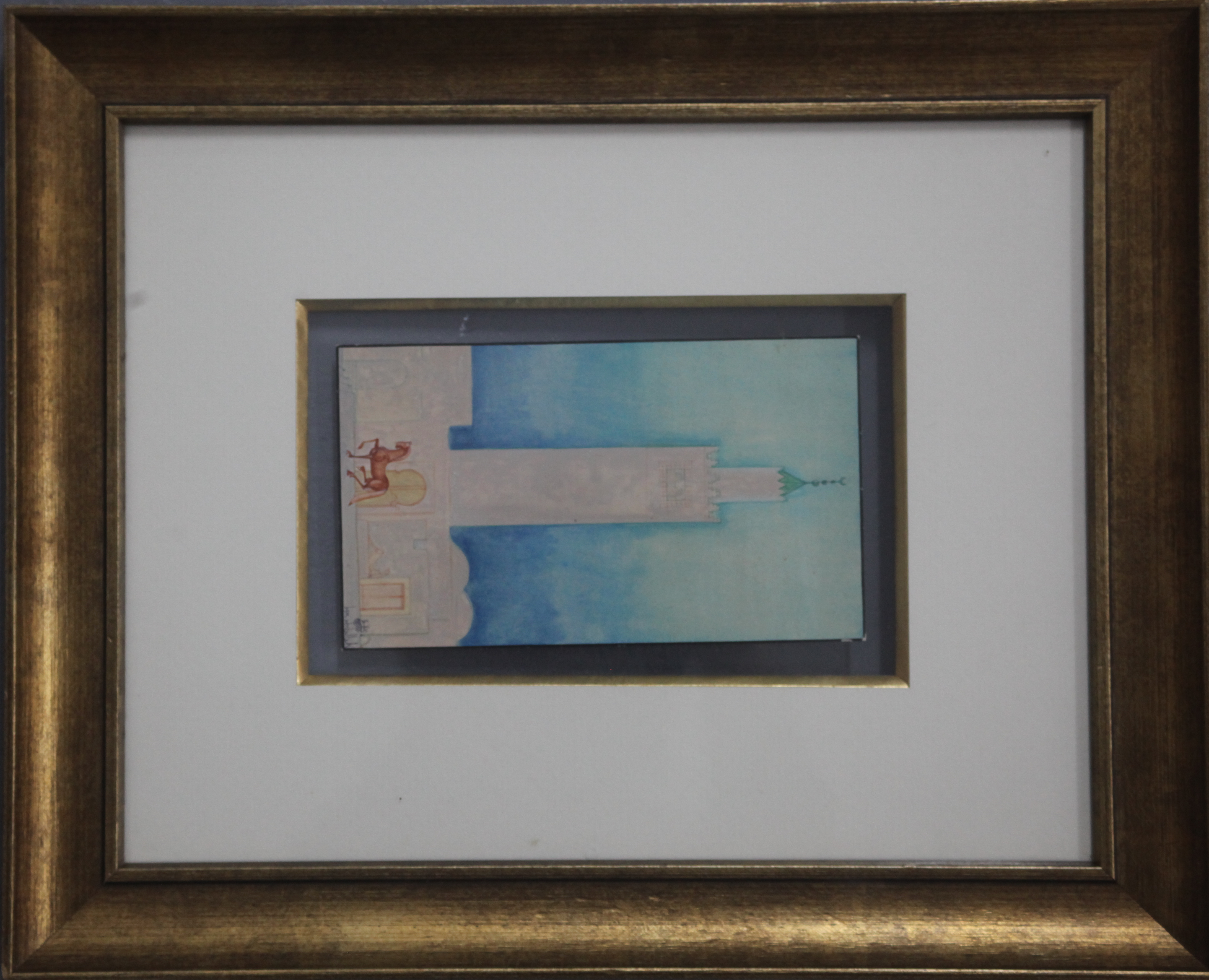
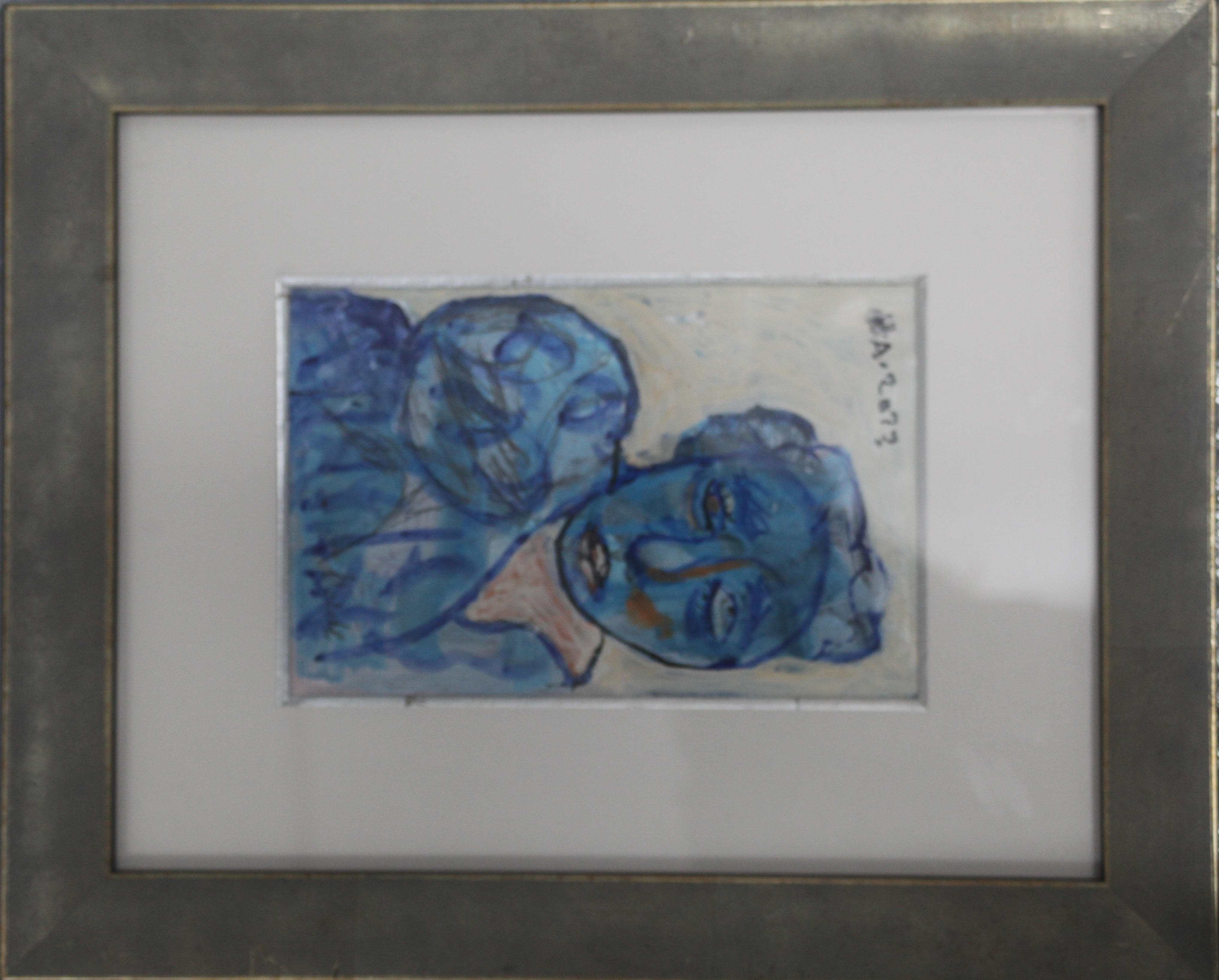


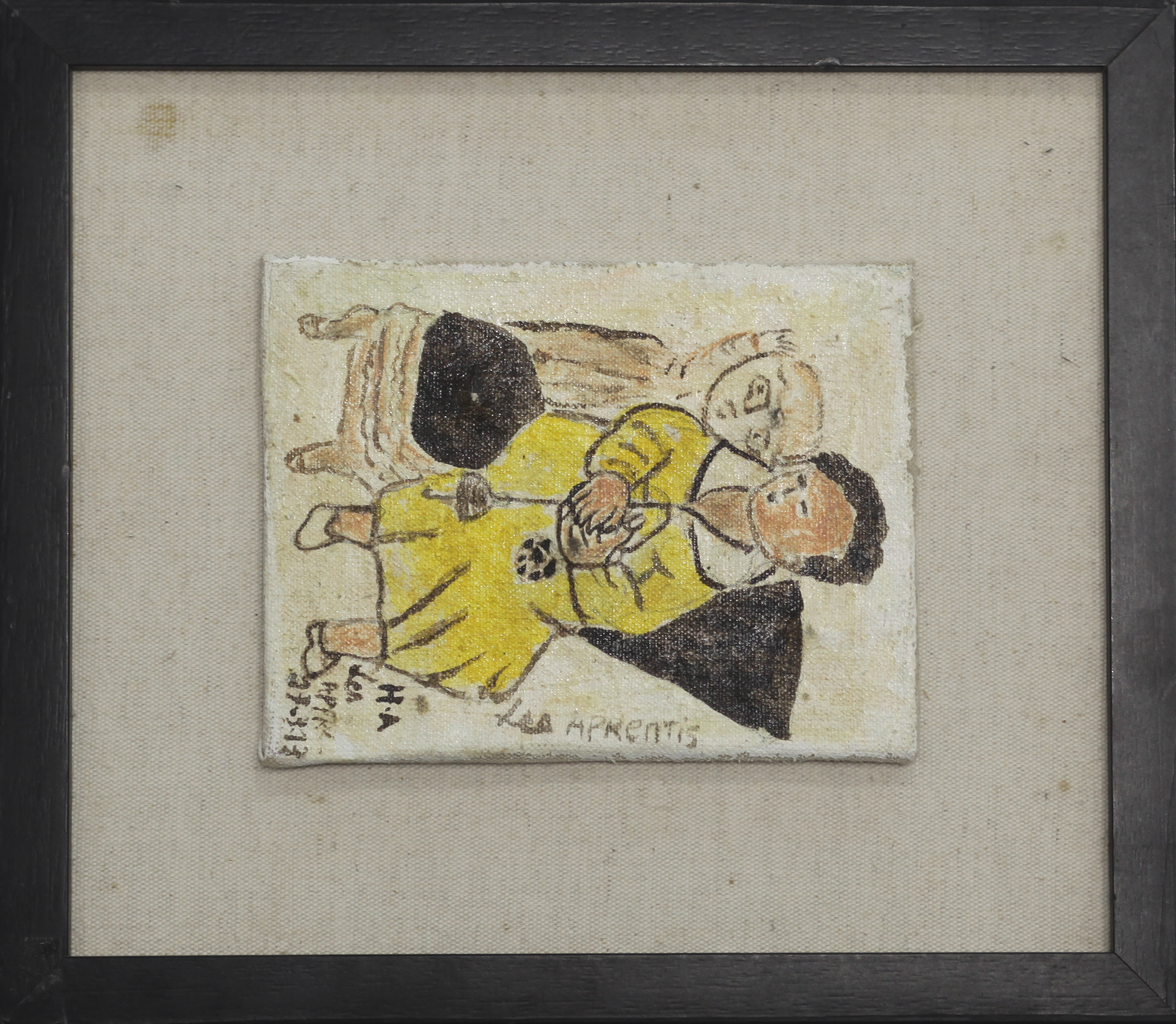
Franco-Tunisian painter — from discreet sketches to the walls of the world
Born in November 1948 in Tazerka, a small coastal village in Tunisia, Ahmed Hajeri grew up in a modest environment where art was not a given. In 1968, he left his native land to settle in France. He first led a life as an electrician worker, far from workshops and galleries, before a happy accident changed the course of his story: his sketches, imbued with a singular sensitivity, were noticed by the architect and artist Roland Morand.
In 1977, his first exhibition at the Galerie Messine, in Paris, met with immediate success and attracted the attention of the art world. Since then, Paris has remained his home port, while staying open to the multiple horizons that nourish his imagination.
︎ hajeriahmed.com
Born in November 1948 in Tazerka, a small coastal village in Tunisia, Ahmed Hajeri grew up in a modest environment where art was not a given. In 1968, he left his native land to settle in France. He first led a life as an electrician worker, far from workshops and galleries, before a happy accident changed the course of his story: his sketches, imbued with a singular sensitivity, were noticed by the architect and artist Roland Morand.
In 1977, his first exhibition at the Galerie Messine, in Paris, met with immediate success and attracted the attention of the art world. Since then, Paris has remained his home port, while staying open to the multiple horizons that nourish his imagination.
︎ hajeriahmed.com
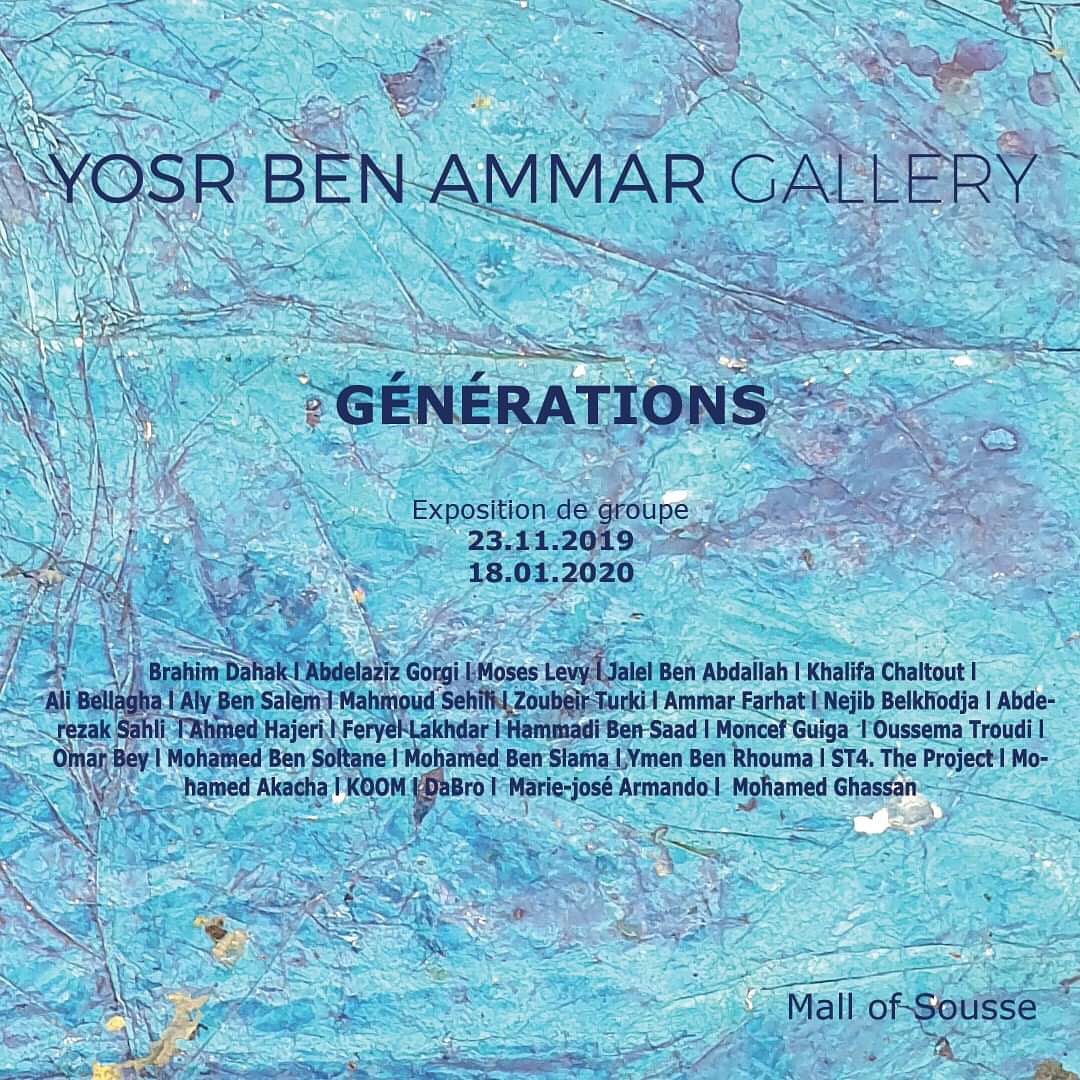
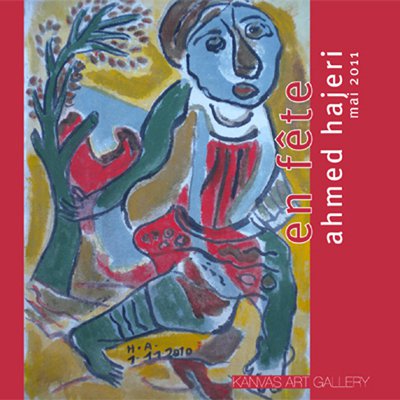
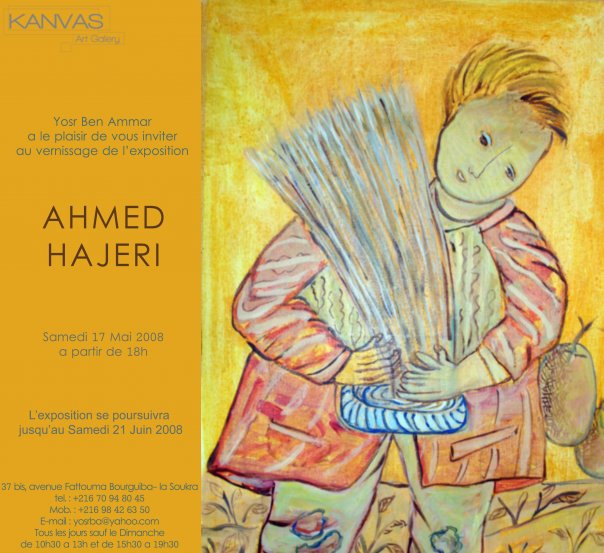
For over four decades, Ahmed Hajeri has exhibited around the world, in prestigious institutions and galleries: Galerie Fanny Guillon-Lafaille (Paris), Phyllis Kind Gallery (New York), Kanvas Art Gallery (Tunis), Institut du Monde Arabe (Paris), as well as in Seoul, Seville, Dakar, and Damascus.
A self-taught artist, he has developed a pictorial language free from academic constraints, where Tunisian memory and cosmopolitan influences dialogue in a colorful, poetic, and deeply personal universe. His works, fragments of wandering and emotion, testify to his ability to transform uprootedness into creative power.
A self-taught artist, he has developed a pictorial language free from academic constraints, where Tunisian memory and cosmopolitan influences dialogue in a colorful, poetic, and deeply personal universe. His works, fragments of wandering and emotion, testify to his ability to transform uprootedness into creative power.
Exhibitions
Art Fairs
